Learn the Basics
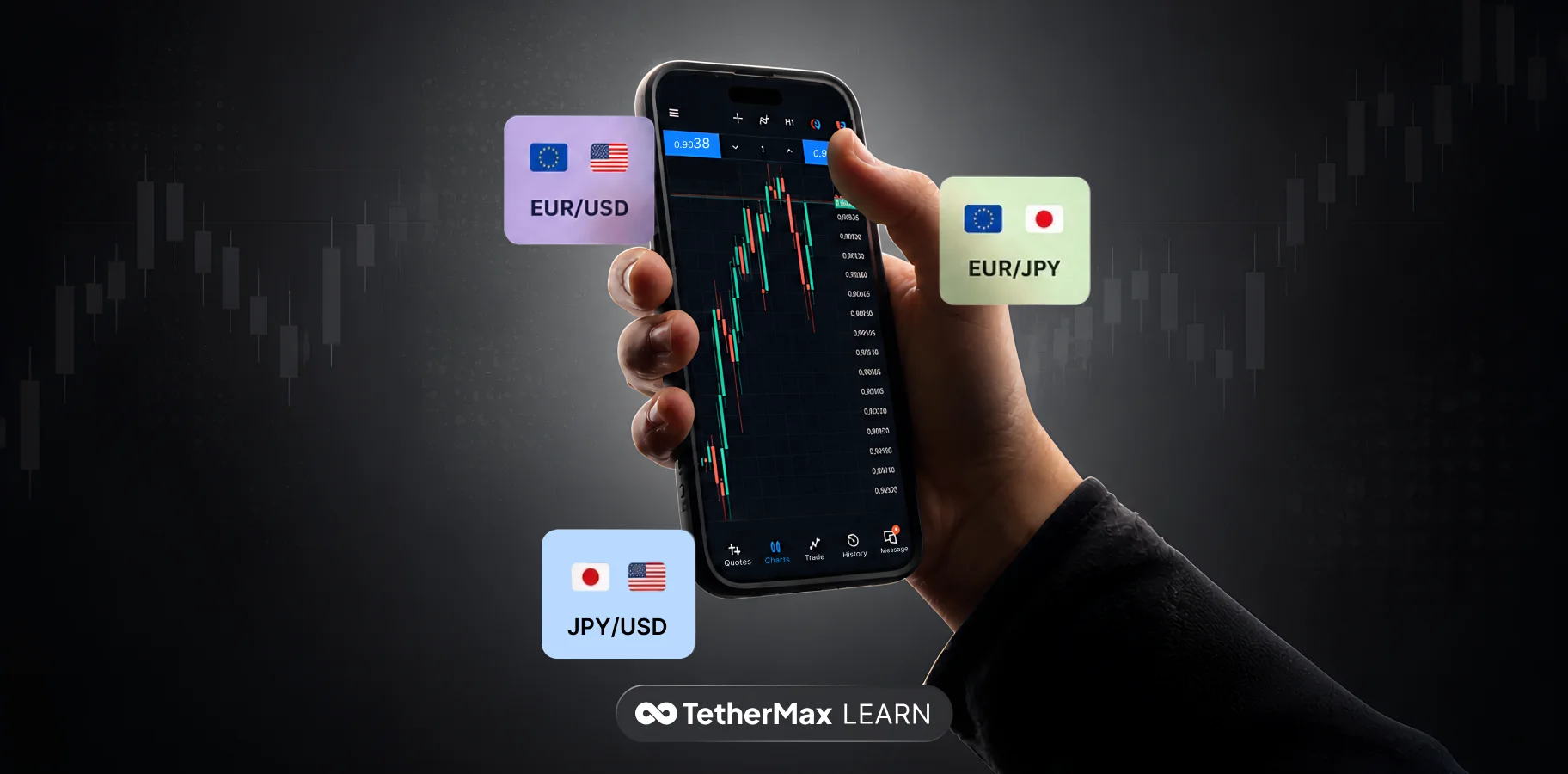
What are FX and CFDs?
- FX (Foreign Exchange): Trading one country's currency for another (e.g. swapping US Dollars for Euros). You are betting on which country's economy will perform better.
- CFD (Contract for Difference): A type of trading where you do not own the actual currency. Instead, you are just betting on whether the price will go up or down.
Key Takeaway: With CFDs, you are trading price movements, not buying real money.
How the Price Works?
Currencies are always traded in pairs (like EUR/USD).
- Base Currency (First): The currency you are buying.
- Quote Currency (Second): The currency you are using to pay.
- The Price: Tells you how much of the second currency it takes to buy one of the first. (If EUR/USD is 1.08, 1 Euro costs 1.08 US Dollars).
The Power & Risk of Leverage
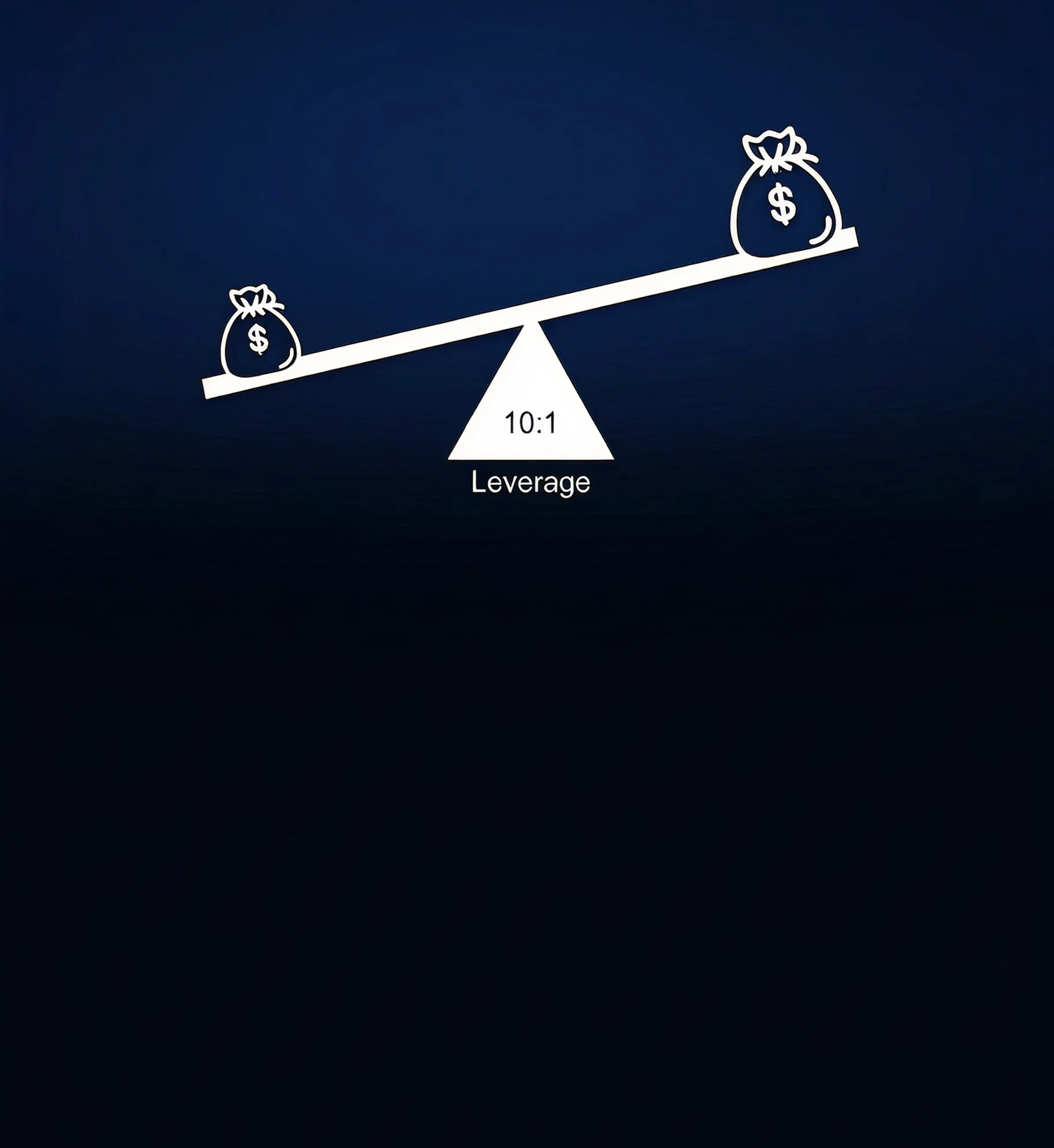
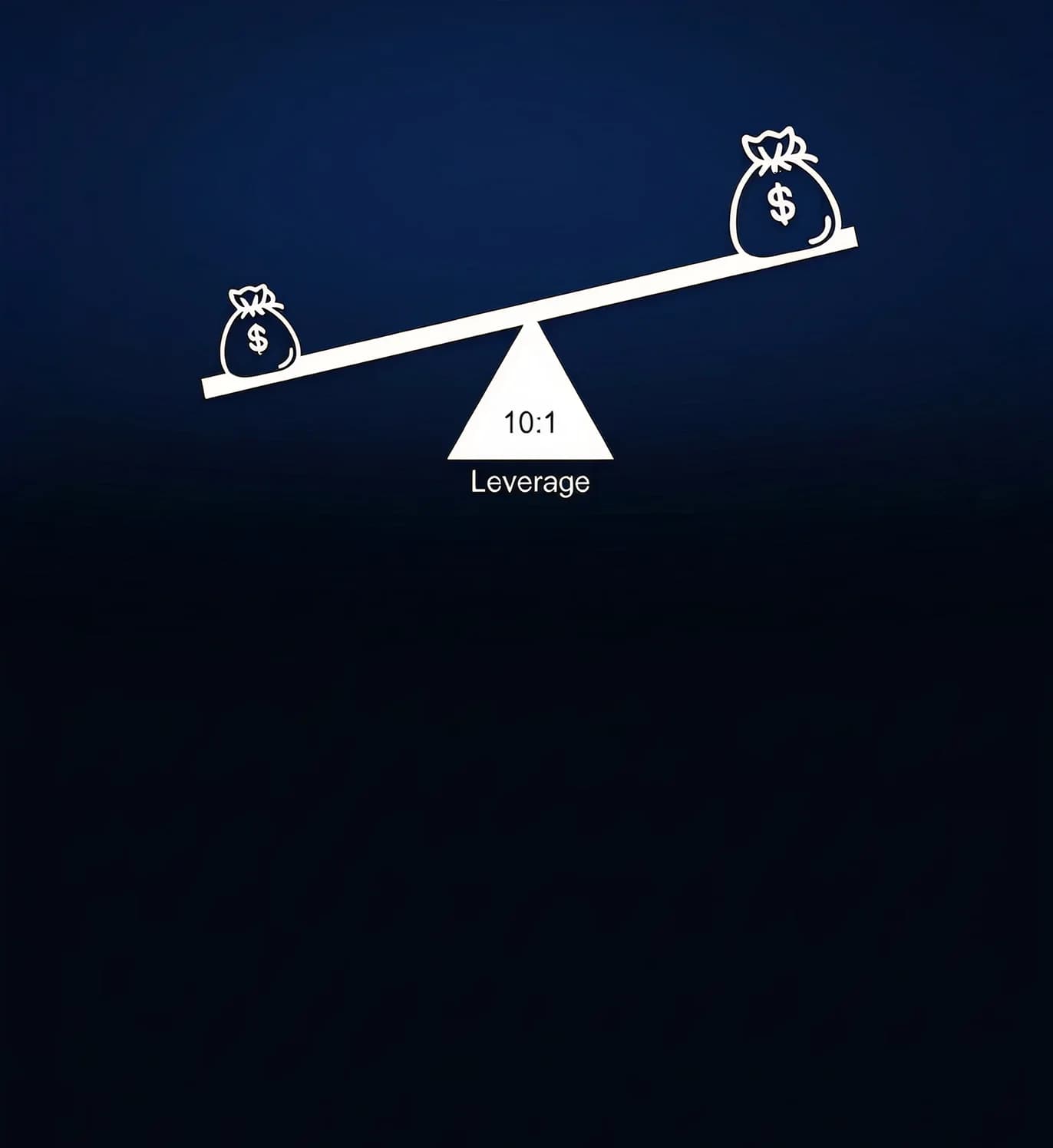
Leverage lets you trade with more money than you actually deposit by 'borrowing' from the broker. While it can magnify your profits, it magnifies your losses just as fast.
Deposit
$1,000
Trade Power
$10,000
A 1% move in the market becomes a 10% swing in your account either up or down.

Market up 1%
+$100
That's +10% on your $1,000

Market down 1%
-$100
That's -10% on your $1,000
A 10% drop wipes out your entire $1,000
It's the exact mirror of the $100 gain. The same small move, run 10x the other way, all the way to zero.
The 4 Main Costs of Trading
Every time you trade, you pay:
- The Spread: The tiny difference between the buy and sell price. This is the broker's basic fee.
- Swap / Overnight Fee: A fee charged if you keep your trade open until the next day.
- Commission: A flat fee charged per trade by some brokers.
- Slippage: When the market moves so fast, your trade gets filled at a worse price than expected.
Key terms glossary
These are the core terms you will encounter when reviewing broker offerings and trading conditions. Understanding them helps you compare products accurately.
Pip
The smallest standard price move in a currency pair. For most pairs, 1 pip = 0.0001 (4th decimal place). For JPY pairs, 1 pip = 0.01.
Lot size
Standard lot = 100,000 units of base currency. Mini lot = 10,000. Micro lot = 1,000. Determines the monetary value of each pip.
Margin
The deposit required to open and maintain a leveraged position. Expressed as a percentage of total position value.
Equity
Your account balance plus or minus the floating profit/loss of all open positions.
STP
Straight Through Processing. Orders routed directly to liquidity providers without broker intervention. Typically lower conflict of interest.
ECN
Electronic Communications Network. Connects traders directly to interbank liquidity. Usually tighter spreads with commission per trade.
Rebate
A portion of the spread or commission returned to a trader through an Introducing Broker (IB) or rebate partner like TetherMax.
Stop loss
An order to automatically close a position when it reaches a specified loss level. Essential for managing downside risk.
MetaTrader 4 (MT4)
A trading platform designed mainly for forex trading. It is lightweight, easy to use, and popular with traders who want a straightforward charting and execution setup. Downloadable via desktop and mobile apps.
MetaTrader 5 (MT5)
An advanced multi-market platform that supports forex plus stocks, futures, commodities, and other instruments, with charting tools, and order options. Downloadable via desktop and mobile apps.
Swap (overnight interest)
A fee charged when you hold a position past the end of the trading day. It's calculated from the interest rate difference between the two currencies, so you can either pay it or earn it. It doesn't apply if you close your position the same day.
Margin call
A warning that fires when your margin starts running low. It's a signal to either add funds or reduce your position.
Stop out
If your margin keeps falling even after a margin call, the broker automatically closes your remaining positions at this level to keep your losses from growing further.
Beginner Checklist: Are you ready?
Before proceeding to any broker comparison or account opening, consider the following honestly.
SELF-ASSESSMENT CHECKLIST
- Do I fully understand that leverage can wipe out my money instantly?
- Am I using 'disposable risk capital': money I can afford to lose without changing my lifestyle?
- Do I know the exact fees my broker is charging me?
- Do I know how to use a Stop Loss (an automatic safety switch that closes a trade before losses get too big)?
Ready to compare your options?
Review partner brokers side by side.